

Collection System FOG Control: Why Prevention Beats the Jet Truck

Right now, FOG is probably on offense in your collection system. You're on defense — sending a jet truck out every few weeks to the same trouble spots, waiting for the call about a restaurant row backup or a lift station overflow. That's not a FOG control program. That's just triage.
A real collection system FOG control program flips that. Instead of removing grease after it's already solidified in the line, you treat it before it becomes a blockage in the first place. Less jetting, fewer SSOs, and a lot fewer 2 a.m. calls.

Why Jetting Alone Isn't a FOG Control Program
Jetting and vacuum trucks aren't wrong — they're just incomplete. They clear what's already there. They don't touch what's forming upstream right now, in every service line feeding into your system. So you end up jetting the same manholes on a loop, quarter after quarter, without the accumulation rate ever actually going down.
There's also a cost problem hiding in that cycle. Hydro-jetting isn't cheap on a per-foot basis, and it's recurring — you're paying that bill on repeat, forever, because you're managing a symptom instead of a cause.
What a Municipal FOG Control Program Actually Looks Like
A municipal FOG control program built on bioaugmentation works upstream of the blockage. Bacteria are dosed directly into the collection system — at lift stations, at known trouble points, throughout the network — and they metabolize FOG naturally before it has the chance to cool, solidify, and bind to pipe walls.
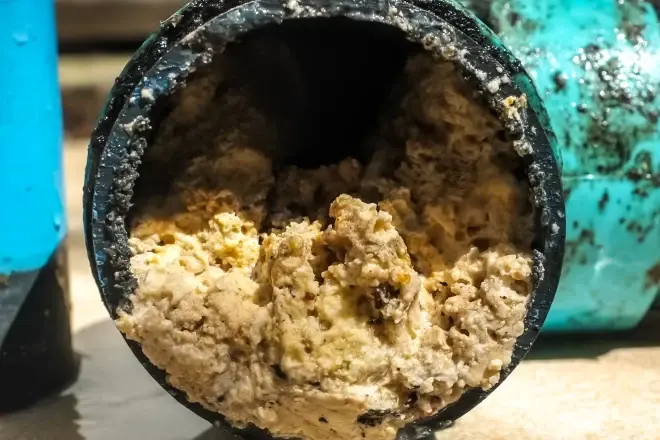
This is the offense/defense shift: instead of reacting to a blockage, you're preventing the conditions that create one.
In-Pipe has run this exact model at scale — one municipal system now runs over 130 dosing areas citywide.
The result: restaurant row stopped needing weekly cleanings, the golf course stopped flooding from FOG-induced overflow, and FOG-related odor complaints from residents dropped to zero. That's not a pilot result — that's a system that used to be in constant defense and now isn't.
FOG-Related SSO Prevention Is the Real Financial Case
Every collection system operator already knows the actual cost of FOG isn't the jetting invoice — it's the exposure. A FOG-related SSO brings regulatory reporting, cleanup costs, and public health risk that dwarfs whatever you spent avoiding it. Prevention isn't the "nice to have" version of FOG control. It's the version that keeps you out of an SSO report in the first place.
This is also where the math changes for capital planning. A system that's chronically dealing with FOG-driven blockages is a system that's quietly inflating its collection system maintenance budget every year. Treating the cause instead of the symptom is one of the few levers that actually bends that curve down.
Bioaugmentation for FOG Control Without the Downsides
The other reason this matters: not every "solution" to FOG is actually safe for your system. Harsh chemicals and surfactants can break FOG apart temporarily, but they can also corrode pipe infrastructure and create their own downstream problems. Bioaugmentation for FOG control avoids that trade-off entirely — it's a naturally occurring biological process, not a chemical intervention, so it treats the FOG without degrading the asset you're trying to protect.
That's the difference between a fix and a program. A fix clears today's blockage. A program changes what's accumulating in your system every day going forward.
Real Science, Real Results
None of this works if it's just a claim. In-Pipe's approach is backed by lab-tested biology and real municipal deployments — not a lab result that never left the beaker. If FOG has been running your maintenance schedule instead of the other way around, it's worth seeing what a true collection system FOG control program looks like in practice.
See how In-Pipe's FOG elimination program works for yourself.


Comments